How to Choose an Annular Cutter & Magnetic Drill
How to choose an annular cutter (HSS vs TCT, diameter, 35/50 mm depth, pilot pin) and a magnetic drill (capacity, magnet force, low profile, tapping) for steel plate.

Avenix Team
· 6 min read
 Ilustrasi
Summary
An annular cutter only cuts a ring at the edge of the hole, so it is faster and uses less power than a standard drill bit for large holes in steel plate. Choose the cutter by diameter, depth of cut (35 or 50 mm), material (HSS or TCT) and shank type, then choose a magnetic drill whose capacity, body height and tapping features suit the job.
An annular cutter is mounted on a magnetic drill to make large-diameter holes in steel plate and sections quickly and accurately. Unlike a standard drill bit, an annular cutter only cuts a ring at the edge of the hole and leaves a core behind, so it needs less power. Choose the cutter by diameter, depth of cut, cutting-edge material and shank type, then choose a magnetic drill whose capacity, body size and features suit the job.
This guide helps fabrication teams, shipyards and structural steel contractors pick the right combination.
How an annular cutter works
A standard drill bit (twist drill) turns the entire volume of the hole into chips. An annular cutter, often also called a core drill or hole cutter for metal, has many cutting teeth arranged in a circle. Only the ring is cut, while the centre comes out as a metal core (slug).
The advantages:
- Faster for large-diameter holes.
- Less power required, because far less material is cut.
- No pilot hole needed for most jobs.
- More accurate holes with a cleaner finish and minimal burr.
- Less strain on the operator, because less feed force is required.
Choosing an annular cutter
1. Diameter
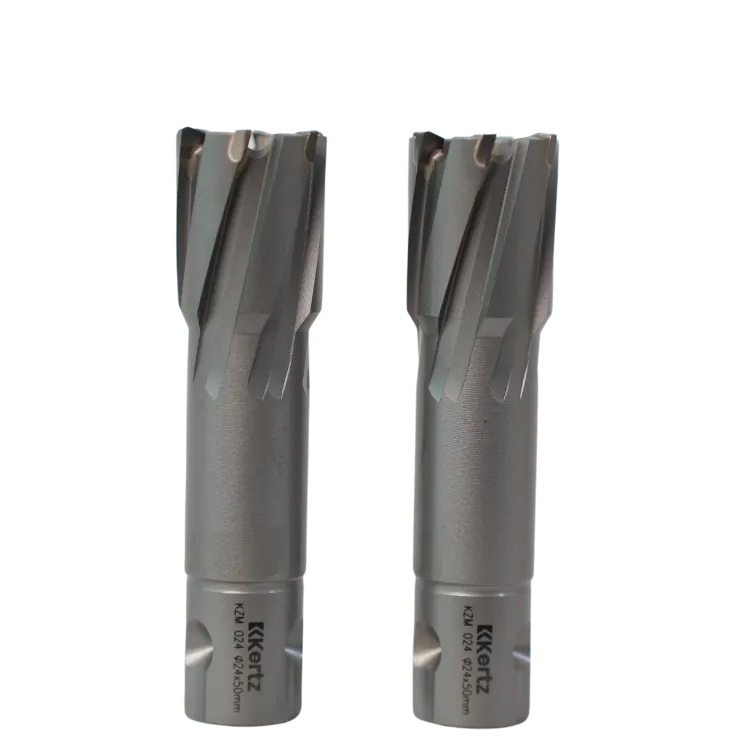
Set the hole diameter according to the working drawing, for example structural bolt holes. Annular cutters come in many diameters. For example, Kertz TCT annular cutters are available from 12 mm to 50 mm.
2. Depth of cut
Depth of cut determines the maximum material thickness that can be drilled through in a single pass. Common sizes:
| Depth of cut | Typical use |
|---|---|
| 35 mm | Medium-thickness plate and flanges, general structural work |
| 50 mm | Thick plate, large H-beam flanges or stacked drilling |
Kertz offers two series: 35 mm depth (KZS series) and 50 mm depth (KZM series). Choose a depth that covers your material with a little to spare. A longer cutter is not needed for thin plate.
3. Cutting-edge material: HSS or TCT
| Material | Characteristics | Suitable for |
|---|---|---|
| HSS (high speed steel) | More economical, tough, can be resharpened | Mild steel and general use |
| TCT (tungsten carbide tipped) | Hard carbide tips, resistant to heat and wear, higher cutting speed | Harder steel, abrasive materials, thick plate, high productivity |
For routine work on structural steel, either type can be used. TCT generally lasts longer on hard materials and in high-volume work.
4. Pilot pin
The pilot pin sits in the centre of the cutter. It centres the cutter exactly on the hole position, delivers coolant to the cutting zone and pushes the core out once the hole breaks through. Pilot pin size depends on the cutter diameter and length. In the Kertz range, for example, a 6.34 mm pilot pin is used for 12–17 mm cutters and a 7.98 mm pin for cutters of 18 mm and above, with different lengths for the 35 mm and 50 mm series.
5. Shank type
The shank is the part of the cutter that fits into the machine’s arbor. The most common type is the 3/4 inch (19.05 mm) Weldon shank. Some machines use other arbor systems. Always match the cutter shank to the arbor on your magnetic drill.
Choosing a magnetic drill
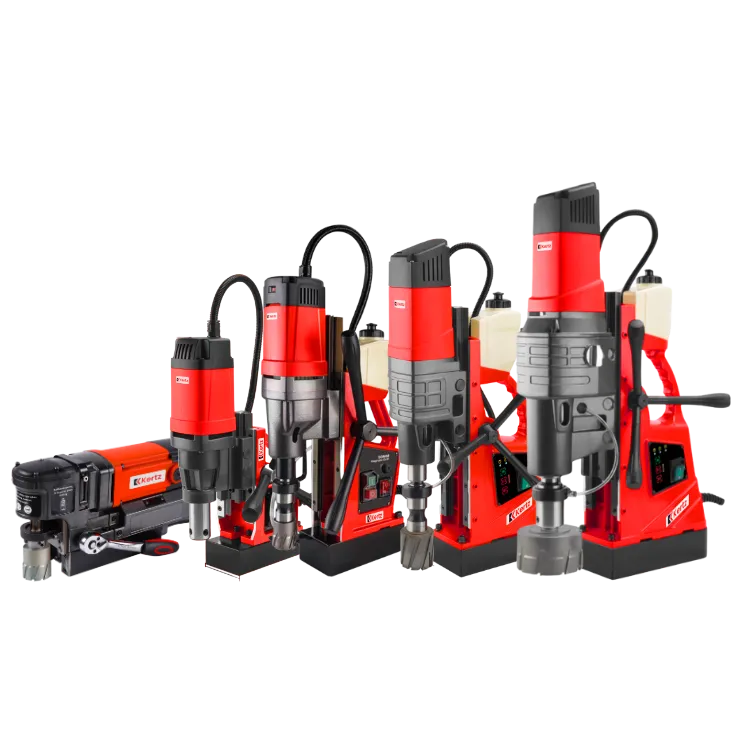
A magnetic drill (mag drill) is a portable drilling machine with an electromagnetic base that clamps firmly to steel. It allows accurate drilling directly on site, for example on installed beams, ship hulls or structures that cannot be brought to a pedestal drill.
1. Drilling capacity
Capacity indicates the maximum hole diameter that can be made with an annular cutter, and is usually part of the model name. For example, the Kertz KMD-35 is a magnetic drill for holes up to 35 mm. Choose a capacity that matches the largest hole diameter you drill regularly.
2. Body height and working space
In tight spaces, such as between section flanges or inside a ship’s structure, machine height is the deciding factor. Low profile models, such as the Kertz KMD-50W, are designed for restricted working space.
3. Tapping function
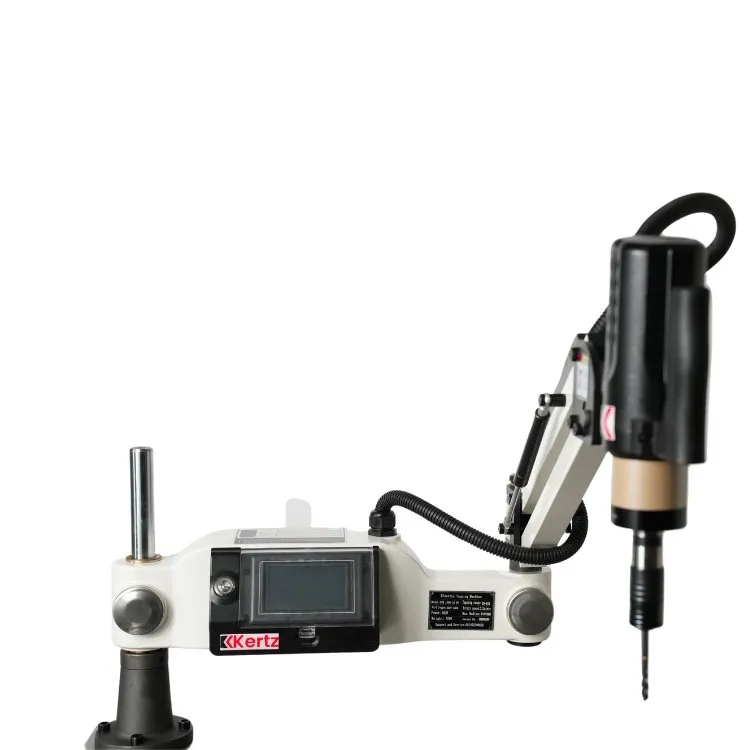
If you also need to cut threads, choose a machine with a drilling and tapping function, meaning forward and reverse rotation plus speed control. The Kertz KMD-60X and KMD-120X are drilling and tapping models. For high-volume threading in the workshop, a dedicated electric tapping machine can be the more efficient option.
4. Magnet force and power supply
Magnetic holding force depends on the thickness and cleanliness of the steel surface. Points to watch:
- Thin plate reduces holding force. Many manufacturers recommend a thickness of around 10 mm or more for full adhesion. For thinner plate, add a steel plate under the magnet area.
- The surface must be flat and free of rust, thick paint, weld slag and chips.
- Make sure the power supply is stable. If the power cuts out, the magnet loses its grip.
5. Safety features
Check for a safety chain or strap, overload protection and a magnet switch that is separate from the motor switch.
Selection summary
| Requirement | Recommended choice |
|---|---|
| Structural bolt holes up to 35 mm, general work | 35 mm capacity magnetic drill + 35 mm depth annular cutter |
| Thick plate or large flanges | 50 mm depth annular cutter, higher-capacity magnetic drill |
| Tight space between sections | Low profile magnetic drill |
| Drilling and threading | Drilling and tapping magnetic drill |
| Hard material or high volume | TCT annular cutter |
Tips for safe drilling and longer tool life
- Clean the surface before attaching the magnet.
- Fit the safety chain, especially when drilling vertically or overhead.
- Use coolant (cutting oil) fed through the pilot pin to reduce heat and extend cutter life.
- Adjust the spindle speed. Larger cutter diameters need lower speeds. Follow the cutter and machine manufacturers’ recommendations.
- Apply steady pressure. Excessive pressure can break cutter teeth, while too little pressure makes the cutter dull faster.
- Clear chips regularly so they do not clog the cutter flutes.
- Watch out for the hot core (slug) ejected once the hole is through.
- Wear PPE: safety glasses, gloves when handling cutters and chips, and hearing protection.
Conclusion
For large holes in steel plate and sections, a magnetic drill and annular cutter combination is faster, more accurate and less labour-intensive than a standard drill bit. Determine the diameter and depth of cut first, choose the cutter material to suit the steel’s hardness, then match it with a magnetic drill whose capacity, body size and features suit the work location.
Avenix supplies Kertz KMD series magnetic drills and 35 mm and 50 mm depth TCT annular cutters for workshops, shipyards and contractors in Batam and Bintan. See the options under magnetic drills and annular cutters, or send your list of diameters and quantities via Request a Quote.