Exterior Wall Waterproofing Membranes: Types & Steps
Membrane waterproofing for building exteriors: liquid vs sheet membranes, application steps, common mistakes and choosing a system for Batam's climate.

Avenix Team
· 4 min read
Summary
Membrane waterproofing is a watertight layer that covers a wall or roof surface so water cannot seep in. For building exteriors the most common choice is a liquid-applied membrane (acrylic elastomeric, polyurethane or polymer-modified cementitious) because it follows the surface with no joints. The result depends on surface preparation, coating thickness, and detailing around windows, corners and cracks.
Membrane waterproofing is a watertight layer that covers a wall or roof surface so water cannot seep into the structure. For the exterior walls of multi-storey buildings, the most common choice is a liquid membrane that is brushed, rolled or sprayed on to form a seamless elastic film.
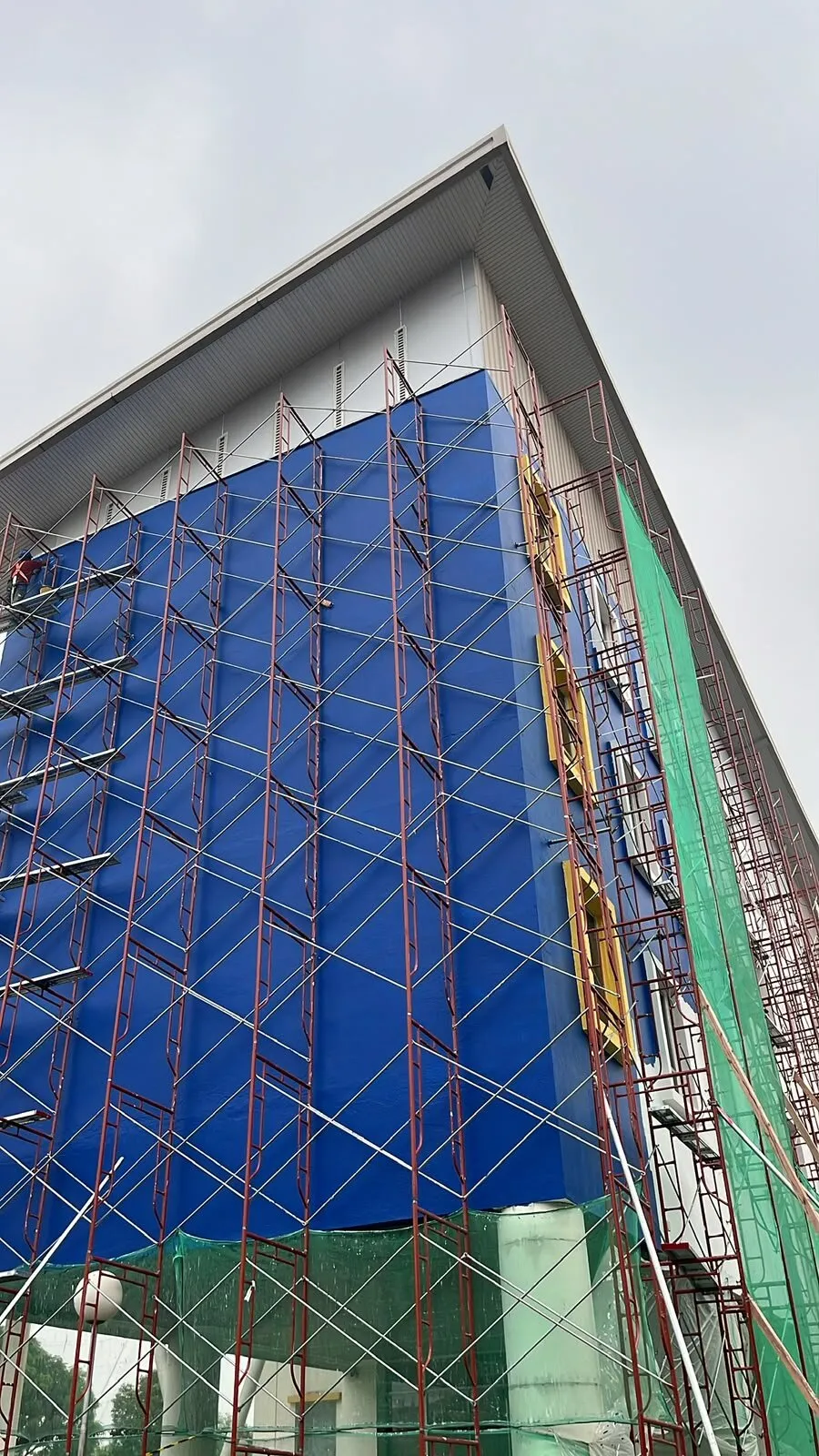
In Batam and Bintan, high year-round rainfall, humidity and wind-driven rain make the exterior walls of tall buildings prone to seepage. This article covers membrane types, application steps and how to choose, drawing on our membrane waterproofing project for a BP Batam building.
Quick answers
| Question | Short answer |
|---|---|
| Membrane for building exteriors | Acrylic elastomeric liquid membrane |
| Number of coats | 1 primer + at least 2 membrane coats |
| Most important factor | Surface preparation and dry film thickness |
| Most leak-prone areas | Window surrounds, corners, hairline cracks, wall-to-roof junctions |
| Weather requirement | Dry surface, no rain during the drying time |
Signs an exterior wall needs waterproofing
- Damp patches or water lines on the inside of the wall after rain.
- Paint that blisters, peels or discolours.
- Mould and moss on the outside or inside of the wall.
- Hairline cracks in the render, especially around windows and building corners.
- A musty smell in rooms next to exterior walls.
Types of membrane waterproofing
Liquid-applied membranes
Applied as a liquid that cures into an elastic film fully bonded to the surface.
| Type | Key features | Typical use |
|---|---|---|
| Acrylic elastomeric | Water-based, elastic, UV-resistant, available in colours | Exterior walls, exposed concrete roofs |
| Polyurethane (PU) | Highly elastic, strong crack-bridging, some types need a UV-protective top coat | Concrete decks, balconies, flat roofs |
| Polymer-modified cementitious | Two-part (powder + liquid), bonds strongly to concrete | Bathrooms, water tanks, basements, walls before finishing |
| Liquid bitumen | Economical, black, not UV-resistant when exposed | Foundations and below-ground walls |
Sheet membranes
Supplied in rolls that are bonded, torched on, or welded at the seams, for example modified bitumen (APP/SBS), PVC, TPO or HDPE. Sheets give a uniform factory thickness, but seams and details around penetrations need careful work. They are used more on decks, flat roofs, basements and pools than on vertical walls.
Applying a liquid membrane to exterior walls
- Access and safety. Erect scaffolding or a gondola, safety netting and barriers. Protect windows, paving and landscaping with plastic sheeting.
- Surface preparation. Remove dust, moss, oil and loose old paint, for example by brushing or pressure washing. Let the wall dry.
- Crack and gap repair. Fill hairline cracks and gaps around window frames with a compatible filler or sealant. Wider cracks are usually reinforced with fabric mesh.
- Primer. Apply the primer recommended for the product so the membrane bonds properly.
- Membrane coats. Apply at least two coats in crossing directions, from top to bottom, until the specified thickness is reached.
- Detailing. Pay special attention to corners, wall-to-roof and wall-to-floor junctions, window sills and pipe penetrations.
- Inspection. Check coverage, pinholes and coating thickness. Where needed, water-test vulnerable areas.
On the BP Batam building, the whole façade was wrapped in frame scaffolding and safety netting, surfaces were prepared wall by wall, and the membrane was applied from the top floor down.
Common mistakes
- Applying to wet or dusty surfaces, so the membrane peels easily.
- Coats that are too thin. Crack-bridging depends on dry film thickness, not on how many buckets were used.
- Skipping window and corner details, which is exactly where water most often gets in.
- Mixing incompatible products, such as a primer and membrane from different systems without the manufacturer’s approval.
- Ignoring the weather, so wet coats are rained on before they cure.
Choosing a waterproofing system
| Situation | Common choice |
|---|---|
| Building exterior walls exposed to direct sun and rain | Acrylic elastomeric liquid membrane |
| Concrete deck or flat roof | Polyurethane or bitumen sheet membrane |
| Bathrooms, toilets, indoor wet areas | Polymer-modified cementitious |
| Water tanks, pools, basements | Cementitious or sheet membrane, depending on water pressure |
| Below-ground walls and foundations | Liquid bitumen or sheet membrane |
Beyond membrane type, consider crack-bridging ability, UV resistance, adhesion to the existing surface, drying time against the project schedule, and the manufacturer’s system warranty.
Conclusion
Successful exterior wall waterproofing depends on more than the product. Surface preparation, crack repair, coating thickness and detailing around windows decide whether a wall stays dry for years.
Avenix carries out construction support work in Batam and Bintan, including waterproofing, scaffolding and wall repair. See our waterproofing services in Batam, or send your project requirements through Request a Quote.