What Is K3? Occupational Safety and Health in Indonesia
What is K3: Indonesia's term for occupational safety and health. Meaning, goals, the legal basis (UU 1/1970, PP 50/2012), duties and examples on site.

Avenix Team
· 7 min read
Summary
K3 stands for Keselamatan dan Kesehatan Kerja, Indonesia's term for occupational safety and health: all activities that ensure and protect workers' safety and health by preventing work accidents and occupational diseases. The main legal basis is Law No. 1 of 1970 on Work Safety, Law No. 13 of 2003 Articles 86 and 87, and Government Regulation (PP) No. 50 of 2012 on SMK3. Companies with at least 100 workers or a high hazard potential must implement SMK3.
K3 stands for Keselamatan dan Kesehatan Kerja, Indonesia’s term for occupational safety and health: all activities that ensure and protect workers’ safety and health by preventing work accidents and occupational diseases. In Indonesia, K3 is governed mainly by Law No. 1 of 1970 on Work Safety and Government Regulation (PP) No. 50 of 2012 on the occupational safety and health management system (SMK3).
This article explains what K3 means, its goals, the regulations in force, the duties of employers and workers, and how K3 is applied on construction sites, in factories and in shipyards.
What is K3: meaning and abbreviation
K3 is short for Keselamatan dan Kesehatan Kerja. The official definition appears in PP No. 50 of 2012, Article 1 point 2, and is repeated in Manpower Ministry Regulation (Permenaker) No. 13 of 2025: K3 is all activities to ensure and protect the safety and health of workers through the prevention of work accidents and occupational diseases.
That definition has two sides:
- Work safety: preventing accidents such as falls from height, being struck by falling objects, caught in machinery, electric shock or fire.
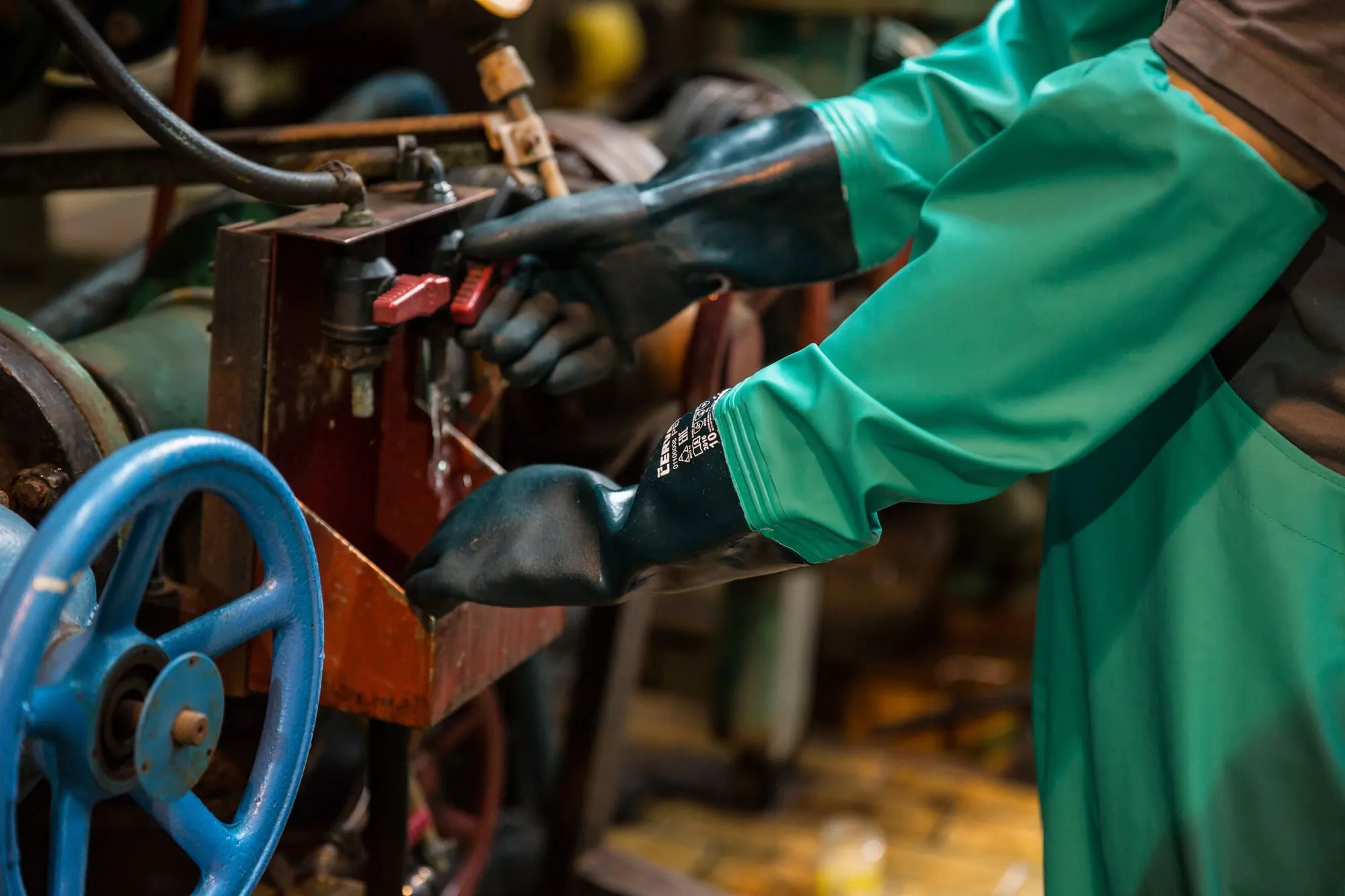
- Occupational health: preventing work-related illness such as hearing loss from noise, lung problems from dust or welding fumes, and chemical poisoning.
The English equivalent is occupational safety and health (OSH). Many companies use HSE (Health, Safety and Environment) or K3L when the environment is managed as well.
What counts as a “workplace”
Law No. 1 of 1970, Article 1, defines a workplace as any room or field, enclosed or open, mobile or fixed, where people work or regularly enter for a business purpose and where there is a source of hazard. Construction sites, warehouses, workshops, vessels and offices with hazards all count.
The goals of K3
The goals of K3 can be summed up in four points:
- Protect workers from accidents and occupational disease.
- Protect other people at the workplace, such as visitors and contractors.
- Safeguard production resources, so machines, equipment and materials are used safely and efficiently.
- Support productivity. PP No. 50 of 2012, Article 2, states that one goal of SMK3 is a safe, comfortable and efficient workplace that drives productivity.
Law No. 1 of 1970, Article 3(1), lists the safety requirements to be regulated, including preventing and reducing accidents, preventing and extinguishing fires, providing personal protective equipment to workers, and controlling dust, temperature, humidity and noise.
Legal basis for K3 in Indonesia
The table below summarises the K3 regulations referred to most often.
| Regulation | Main content |
|---|---|
| Law No. 1 of 1970 on Work Safety | The core K3 law: workplace definition, safety requirements, management duties, workers’ rights and duties |
| Law No. 13 of 2003 on Manpower, Articles 86 and 87 | Every worker’s right to K3 protection; every company’s duty to implement SMK3 integrated with its management system |
| PP No. 50 of 2012 on SMK3 | SMK3 mandatory for companies with at least 100 workers or high hazard potential; five SMK3 elements and audits |
| Permenakertrans No. PER.08/MEN/VII/2010 on Personal Protective Equipment | PPE types; employers must provide PPE meeting SNI or applicable standards, free of charge |
| Permenaker No. 5 of 2018 on K3 in the Work Environment | Threshold limit values for physical, chemical, biological, ergonomic and psychological factors, including noise of 85 dBA for 8 hours a day |
| Permenaker No. 13 of 2025 on P2K3 | Duty to form a P2K3 committee, replacing Permenaker No. PER.04/MEN/1987 |
Law No. 1 of 1970: the core K3 law
Law No. 1 of 1970 was enacted on 12 January 1970 and applies to every workplace under Indonesian jurisdiction: on land, underground, on and under water, and in the air. The articles used most on site:
- Article 3: work safety requirements.
- Article 9: management must show and explain to every new worker the workplace hazards, safeguards, PPE and safe working methods.
- Article 12: workers’ rights and duties.
- Article 13: anyone entering a workplace must follow safety instructions and wear the required PPE.
- Article 14: management duties, including providing the required PPE free of charge.
- Article 15: breaches of implementing regulations can carry up to 3 months’ detention or a fine of up to Rp100,000.
That fine reflects the 1970 text and is widely seen as out of step with today’s values. The obligations in the law still apply and underpin the other K3 regulations.
PP No. 50 of 2012: SMK3
SMK3 is the part of a company’s management system that controls work-related risks. Under Article 5, SMK3 is mandatory for companies employing at least 100 workers or with a high level of hazard potential. Article 6 sets out five elements:
- Setting the K3 policy.
- K3 planning.
- Implementing the K3 plan.
- Monitoring and evaluating K3 performance.
- Reviewing and improving SMK3 performance.
SMK3 audits use the criteria in the regulation’s annex at three levels: initial (64 criteria), transitional (122 criteria) and advanced (166 criteria).
Rights and duties under K3
| Party | Main duties | Basis |
|---|---|---|
| Employer or management | Explain hazards and safe methods to new workers; post K3 requirements and signs; provide PPE free of charge; implement SMK3 where required | Law 1/1970 Articles 9 and 14; Permenakertrans PER.08/MEN/VII/2010 Articles 2 and 5; PP 50/2012 Article 5 |
| Workers | Wear the required PPE; comply with K3 requirements; give truthful information to inspectors | Law 1/1970 Article 12; Permenakertrans PER.08/MEN/VII/2010 Article 6 |
| Visitors and contractors | Follow safety instructions and wear the required PPE | Law 1/1970 Article 13 |
Workers have rights too. Law No. 1 of 1970, Article 12, lets workers ask management to apply all K3 requirements, and Permenakertrans PER.08/MEN/VII/2010, Article 6(2), lets workers object to working if the PPE provided does not meet requirements.
Examples of K3 in practice
K3 follows the order of risk control: remove the hazard where possible, substitute something safer, add engineering controls, set procedures, and finally protect workers with PPE. Practical examples:
| Hazard | Example control | Supporting PPE |
|---|---|---|
| Falling objects on site | Safety nets, exclusion zones under lifting work | Safety helmet |
| Work at height | Guardrails, inspected scaffolding, anchor points | Full body harness and lanyard |
| Machines starting during repair | Lockout/tagout (LOTO) procedure | LOTO padlocks and tags |
| Noise above 85 dBA | Enclosures, job rotation | Earplugs or earmuffs |
| Dust, welding fumes, solvent vapour | Ventilation, fume extraction | Mask or respirator |
| Sharp and hot objects | Machine guarding | Gloves and safety shoes |
Indonesia also marks National K3 Month every year from 12 January to 12 February.
K3 in Batam and Bintan
Batam and Bintan have many shipyards, factories in industrial estates and construction projects. The most common hazards are work at height, welding, confined spaces, noise and machine maintenance. For PPE by job type, see the mandatory PPE checklist for construction and shipyards and the shipyard PPE checklist. For maintenance work, read what is lockout/tagout.
K3 equipment available at Avenix
Avenix supplies PPE and K3 equipment to companies in Batam and Bintan, including:
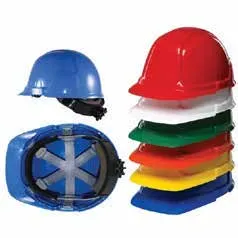
- The SNI-marked NSA Warden safety helmet in six colours.
- The GoSave FBH Eco full body harness with 2 lanyards.
- Delta Plus Interlagos and Magny Cours 2 earmuffs for noisy areas.
- BD-8521AS LOTO safety padlocks with a choice of key systems for lockout procedures.
Browse the full personal protective equipment and LOTO categories, or use the PPE kit builder to work out needs per worker. Avenix has stores in Batam and Bintan (BIE Lobam).
Starter checklist for a K3 programme
- Identify hazards in every area and job type.
- Check whether the company must run SMK3 and a P2K3 committee (at least 100 workers or high risk).
- Write safe work procedures, including work permits and LOTO for machine maintenance.
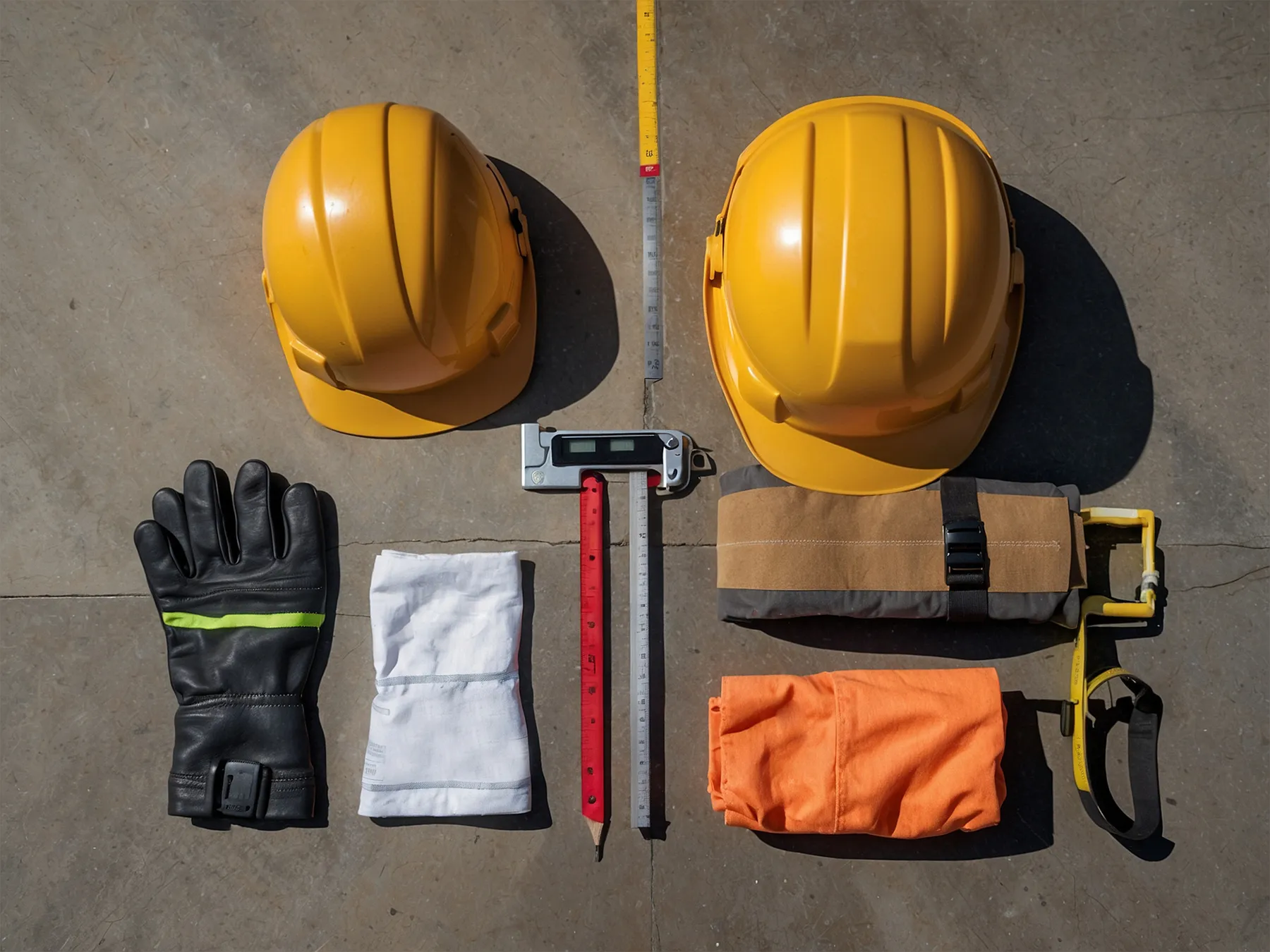
- Set PPE per role and supply it free of charge, to SNI or applicable standards.
- Give a K3 induction to every new worker, visitor and contractor.
- Post mandatory PPE signs in work areas.
- Inspect PPE regularly and replace damaged items.
Send your PPE and K3 equipment list through Request a Quote to get a quotation from the Avenix team.